[ 01 ]
After years living in a house whose bedroom window faced towards a vast concrete wall, one of the main selection criteria when I'm searching for a new place to live is having a nice view. Now, thanks to this insistence, my window displays a privileged view of the sunset every day.
Reds, oranges, yellows, greens, cyans, blues, purples, and magentas in the most diverse combinations. I found out that the sunset changes across the year. The triade orange-magenta-purple announces the arrival of the short days of autumn, while spring brings citric yellows and soft greens that extend throughout the summer.
The sun is not the only protagonist in this story: it's the clouds, in their many forms, that intercept the rays of light to reveal vibrant and elaborate gradients. Even when heavy and dark, their soft movement sometimes reveals glimpses of a colorful sky, closing soon after as if it'd already shown everything we were allowed to see.
Living an increasingly rushed life, I started to appreciate this everyday event precisely because of its ephemerality, which forces us to stop the routine and pay attention to the countless color combinations that form momentarily, before giving space for night to arrive.
IMG_00
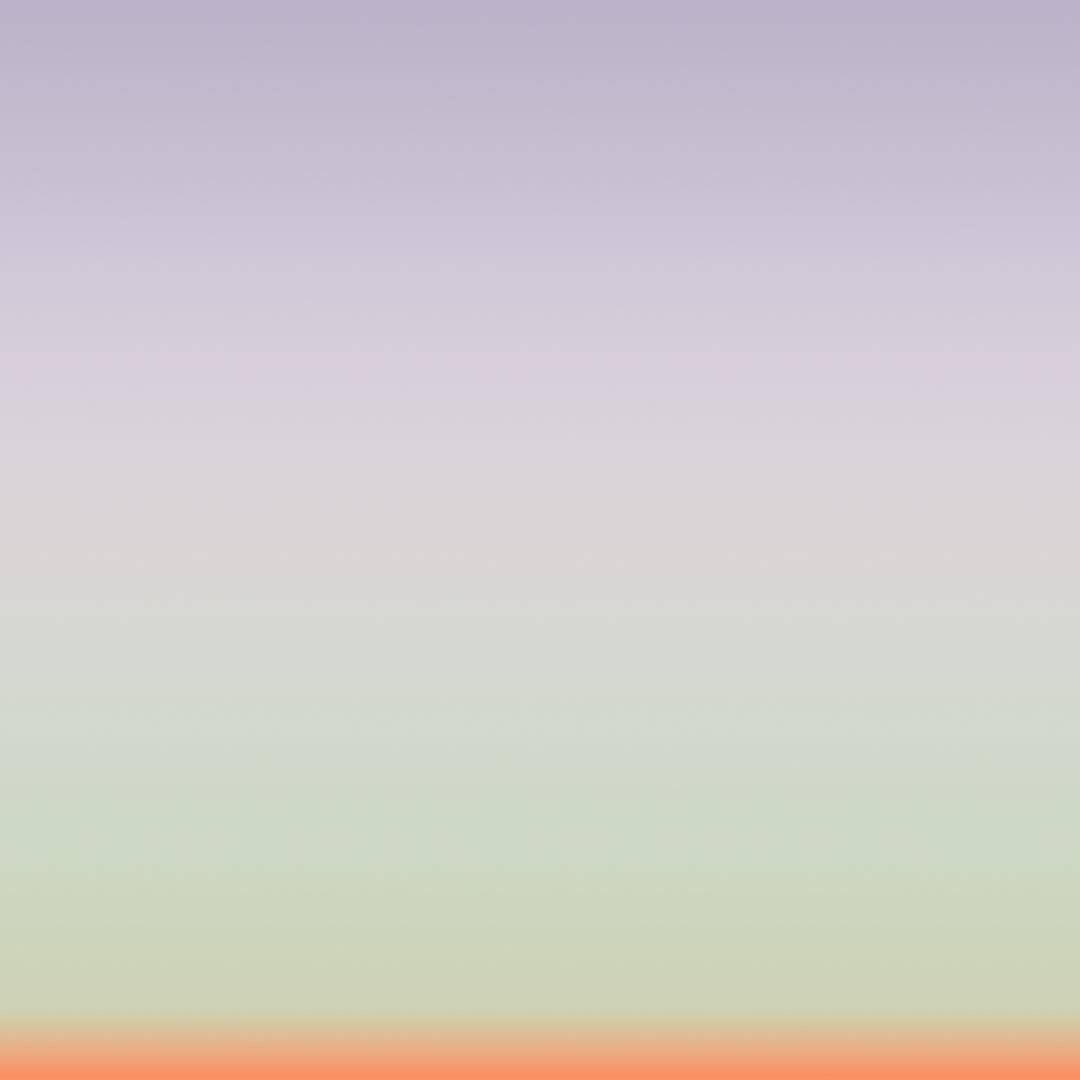
Gradient #036 — Summer
IMG_01

Gradient #201 — Autumn
[ 02 ]
The year 2025 was one of the most intense I've had in terms of work, a period in which I decided to bet in my career as a creative coder. I was soon invited to be a part of many interesting projects and, in the last trimester, I got a job focused in this field.
Whether it's in the accelerated rhythm of a design agency or between the never-ending work as a full-time contractor by day and freelancer at night, the sunset has always shown up as a breathing moment that connects me back to reality outside the screens. Pausing to watch time go by became a habit and, after contemplating so many, I started to want to record them.
Ephemeral by nature, an interesting characteristic of sunsets is not allowing themselves to be recorded with ease — most of those who try to photograph them fail to capture their full beauty. Because of this, I needed to be creative in my process and seek alternative tools for portraying them effectively.
IMG_02

Gradient #124 — End of Summer
IMG_03

Gradient #240 — Beginning of Winter
[ 03 ]
With this premise, I began recording sunsets daily using gradients. More than the photographic act of capturing a perfect moment of a scene, this process became almost as painting, with each color composition being the result of the subjective perception of the phenomenon observed over a period of time.
Each gradient was a race against time: while I tried to reach a color located at a point in the sky, other spots had already changed their hue. Working only with the vertical axis, it was also necessary to cut excess information, simplifying occasional clouds and suppressing the chromatic variations along the horizon.
The software used to create the gradients was Blender. All sunsets are textures applied to planes, organized horizontally by date and vertically by time of recording. This information is noted in the name of each object, allowing us to return to the project and remember the exact moment each sunset occurred.
I started the project in mid-January, the perfect excuse to extend it throughout the rest of 2025. In a huge coincidence that alludes to the work period, I concluded the year with a total of 365 gradients. There were 162 days during which — most of the time — many sunsets were recorded in sequence, revealing the gradual transition between day and night.
IMG_04

Gradient #365 — Last entry
IMG_05
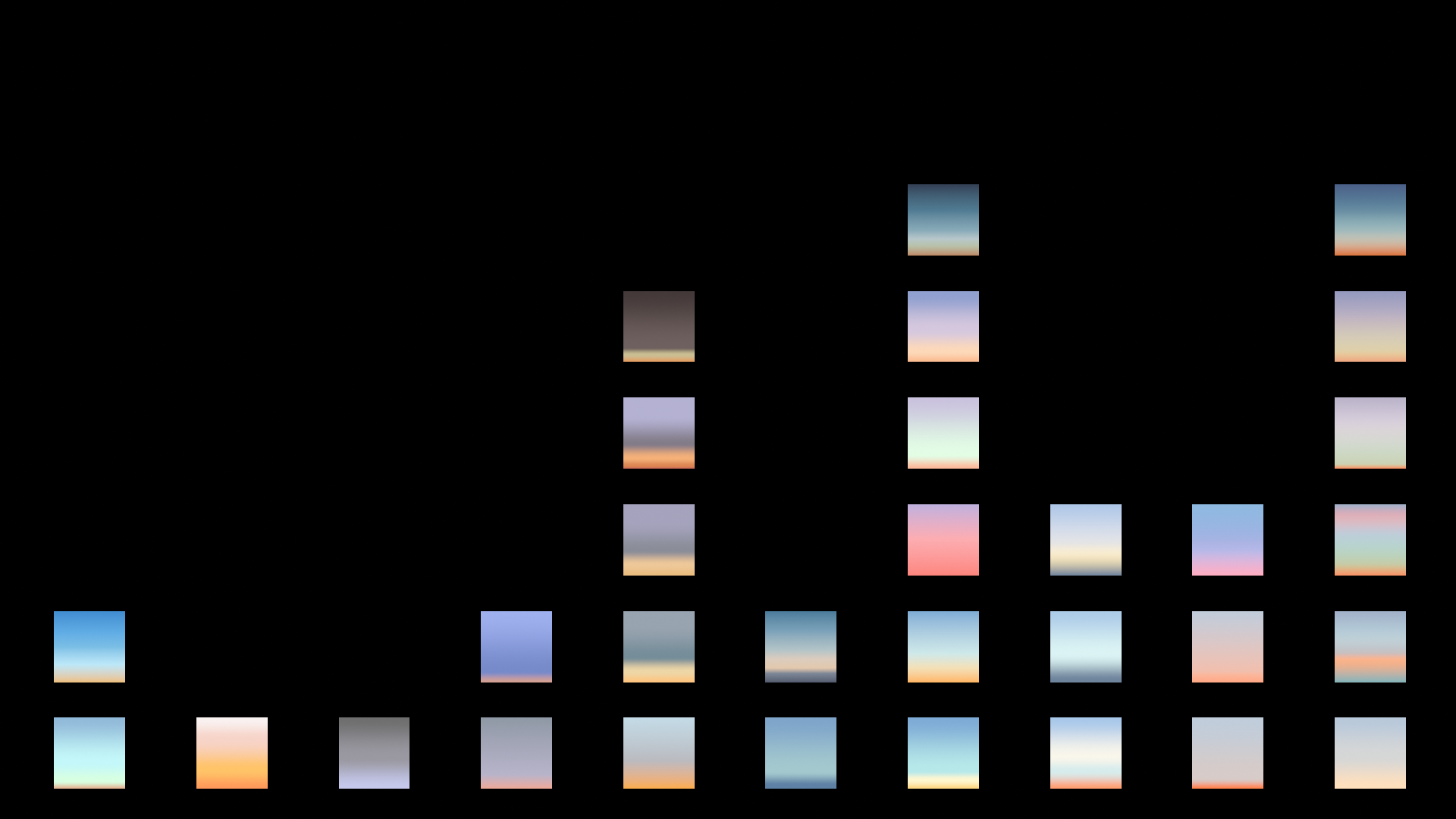
Gradients using Blender's shader system. Each column represents a day, often containing multiple gradients created throughout the duration of a sunset, highlighting their gradual change.
[ 04 ]
Even though 2025 was quite productive and rewarding, I finished it completely exhausted. During the end-of-year break, I forced myself not to work on anything related to design of creative coding, resulting in a pause in this project.
It took me a while for to return focusing on my personal projects. I tried a few times to turn the gradients into a final product, but it wasn't until April that I had the idea to combine them with my old desire to learn Three.js, to create a interactive 3D visualization of them.
First of all, I organized a spreadsheet transcribing indexes, dates, times, and color codes of all entries. With this, I positioned each gradient on the coordinates of a globe, using the date and time to determine the longitude and latitude, respectively. The result is a tilted band that reveals us the variation in day length across the year, with summer and winter slanted upwards and downwards in relation to a thin line marking exactly 18:00.
IMG_06
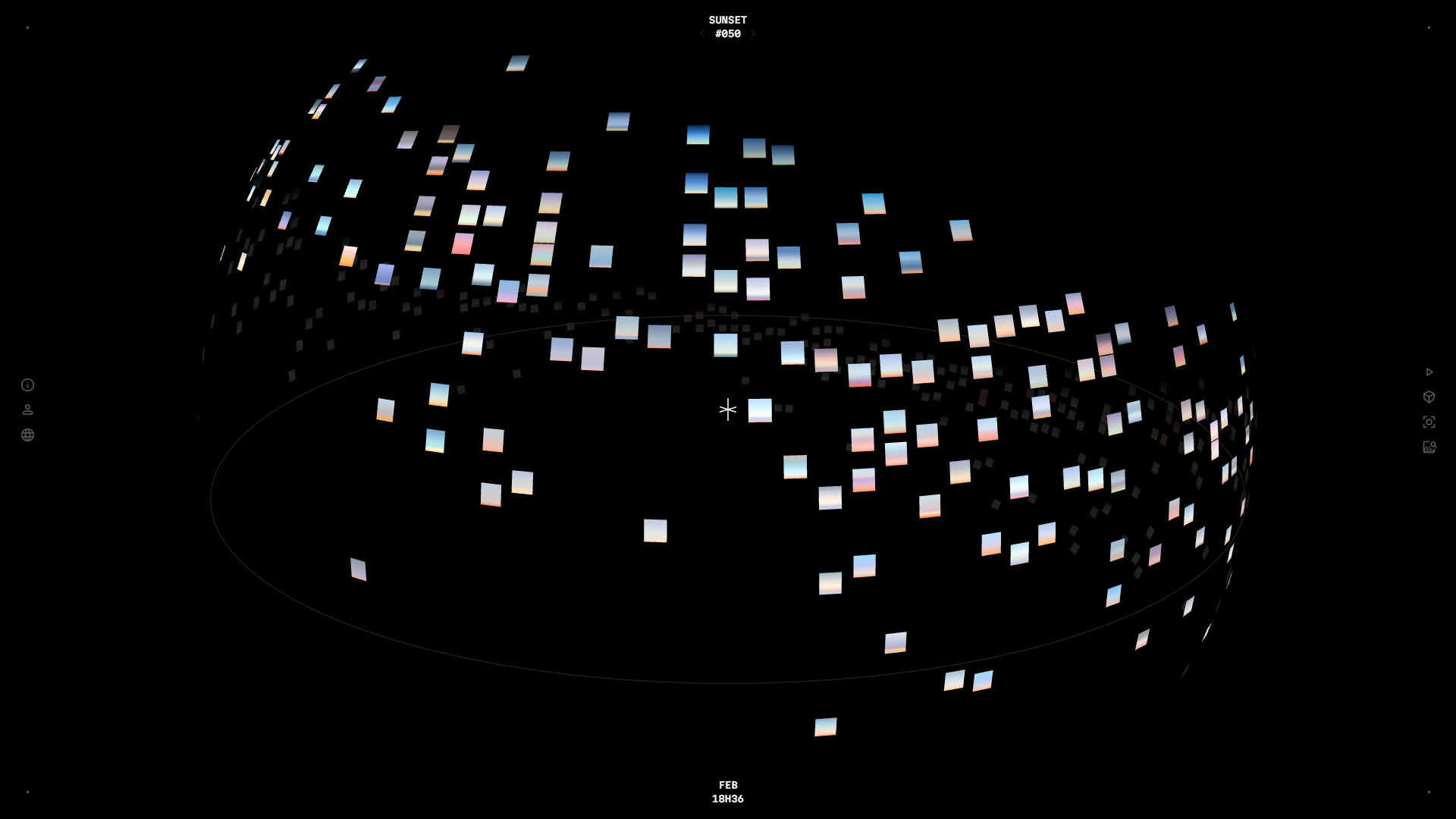
Interface contendo todos os gradientes, suas informações e opções de visualização do conjunto.
[ 05 ]
All planes that make up the globe share the same geometry and material. To display all 365 variations without making the page heavy to load, instead of using an image per plane, all gradients were compressed into a single texture with a series of thin bands.
To show each sunset individually, the correspondent slice is selected by calculating its position in the texture based on the gradient's index. Lastly, if the plane is seen from behind, it is darkened to highlight those in the foreground.
From the camera rotation, we compute the observed month, date, and time, and, comparing them with the spreadsheet information, we discover which gradient current is the closest to the center of the screen. This information is displayed in the page's interface, helping us to browse the globe.
Finally, when close to a gradient, the color codes that compose it up are revealed, displayed in the RGB, HEX and vec3 formats, together with the interpolation used to create the gradient.
You can access the page at sunset.joaogeneroso.com
IMG_07
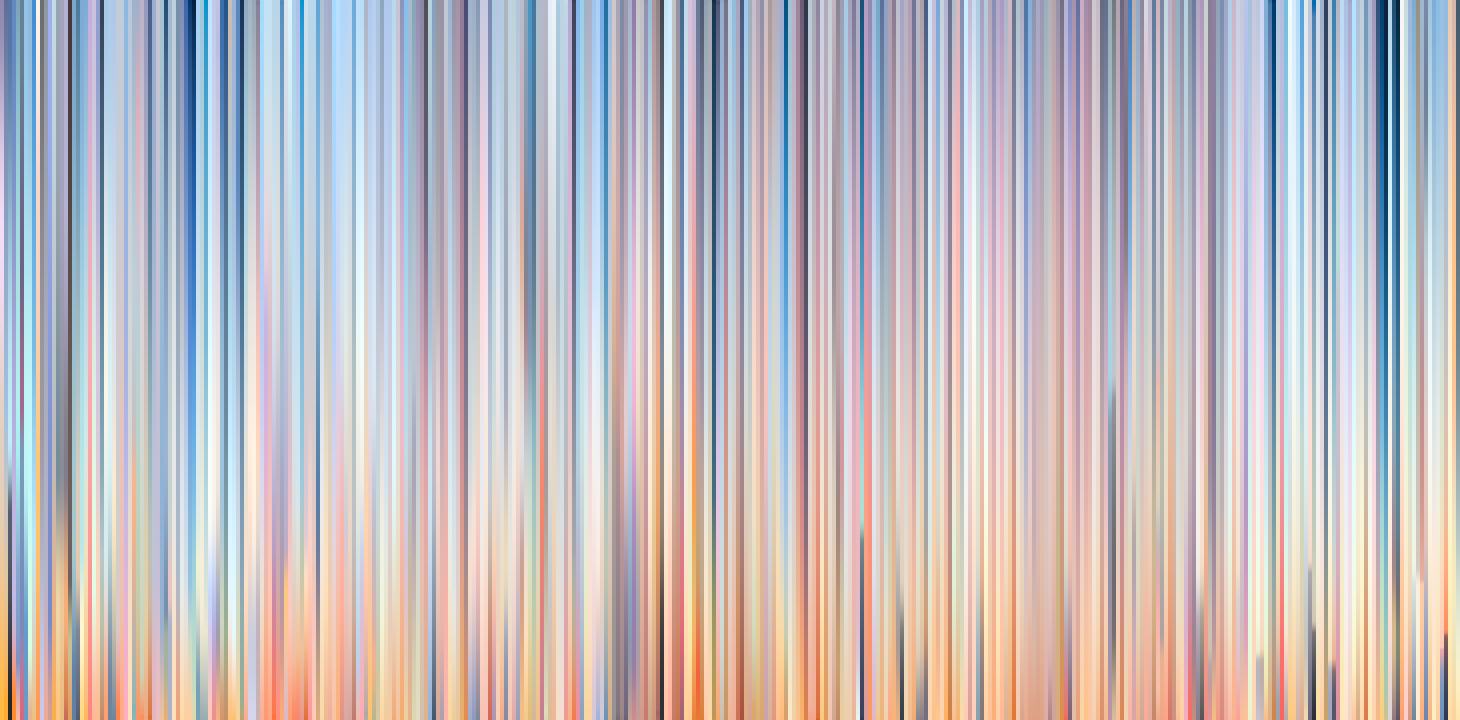
All 365 gradients combined into a single texture. To show each sunset individually, the bands are selected based on the index of each plane.
IMG_08
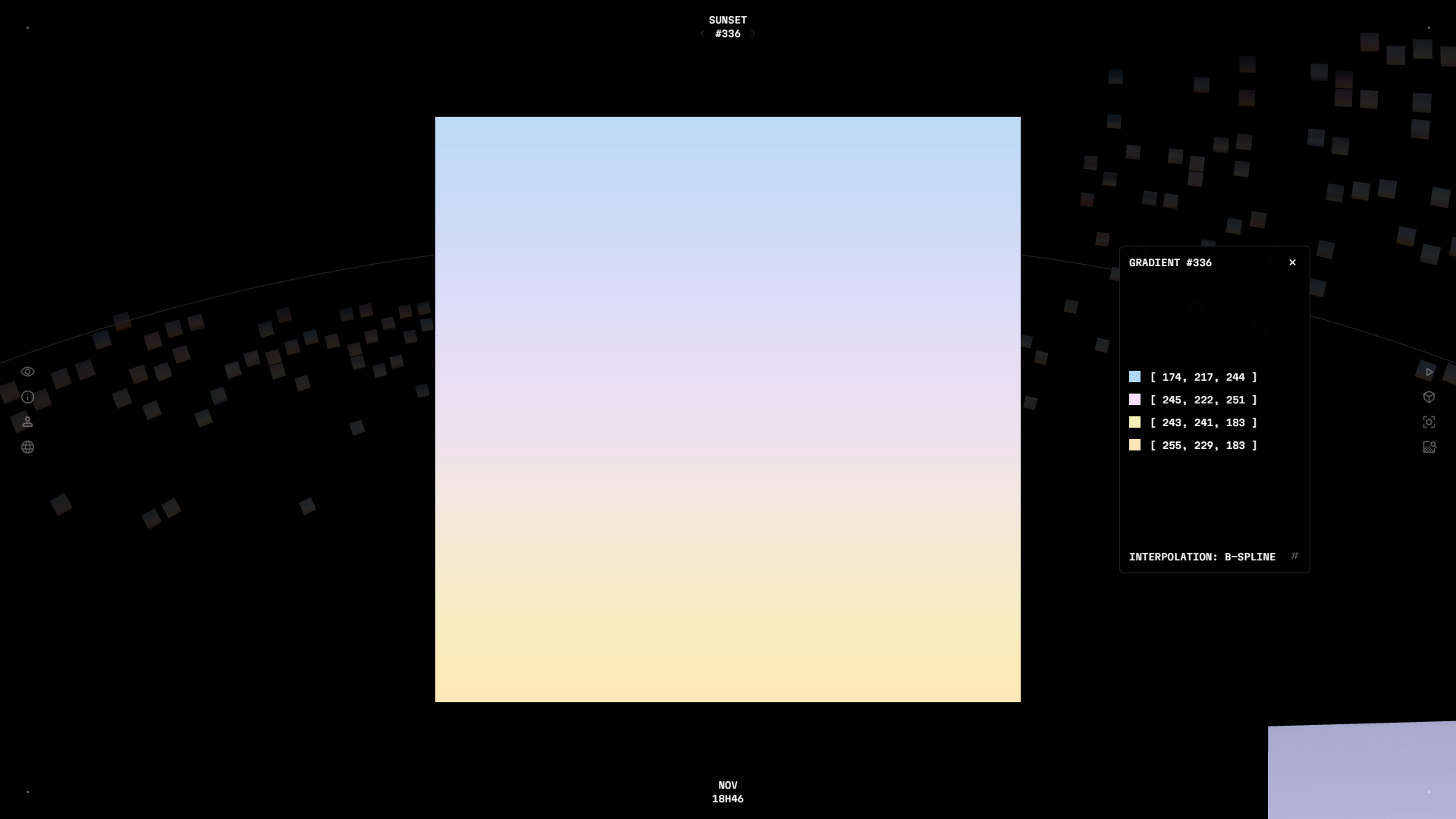
Interface displaying a gradient's information, such as index, colors and interpolation.
[ 06 ]
The result of this project is a small archive available as a webpage. I recognize the irony in converting into content a hobby whose initial objective was to escape the design rush, but creating for myself has helped me not to get lost in this profession. Besides that, I can now look back to the activity I dedicated myself for a whole year and appreciate the process behind it.
I complete this project while opening the doors to a new one: writing about my creative process. Although it's my favorite part, the development phase of projects like this rarely have a dedicated space for discussion — at least not on the same scale as the final product.
I intend to show the behind the scenes of some of my projects, both personal and professional, writing about design from the perspective of creative coding. If you are interested, you can follow my Instagram to know when a new post has been published.
I'll always be open to chat about this an other topics. You can send me a message on Instagram or an email at hey@joaogeneroso.com.
Thank you for reading until here!
All the best, João Generoso